
The West Coast can be a powerful fulfillment region for brands that need better access to western demand, cleaner inbound logistics, and faster delivery into major coastal markets. 3PL Bridge helps brands find vetted 3PL partners on the West Coast based on operational fit, shipping strategy, and long-term network needs.
At a certain stage, distance becomes expensive.
When inventory sits too far from western demand, delivery slows down, parcel costs rise, and the operation starts working harder than it should to meet service expectations. For brands with customers, retail partners, or inbound supply tied closely to the coast, the West Coast often becomes less of a regional option and more of a strategic requirement.
That is especially true when the business needs stronger access to major western metros, cleaner support for imported inventory, or a better way to serve customers without forcing every shipment to travel across the country.
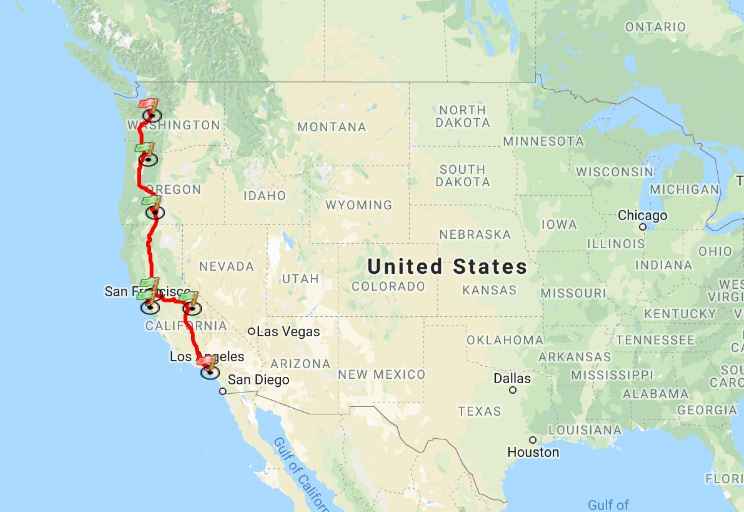

The West Coast can offer an advantage that other regions cannot replicate as cleanly. It often gives brands better positioning near major population centers, better alignment with import-driven inventory flow, and a more practical way to reduce shipping distance for western demand.
For the right business, that can mean faster delivery performance, lower fulfillment friction, better support for marketplace and DTC operations, and a stronger regional base for retail and wholesale distribution. It can also help simplify inventory movement when products are entering the country through western ports or need to stay closer to coastal demand.
The value is not just geographic. It is operational. The right West Coast 3PL should make the network more efficient, not just more spread out.

The experience was exceptional. Communication was frequent and responses where quick wheninformation was requested. I would absolutely recommend 3PL Bridge to our partners and will beutilizing 3PL Bridge for our future operational needs.

The team at 3PL Bridge go above and beyond to helptheir clients. Communication is a top priority for themand they are extremely quick to keep you up to date. Iam extremely satisfied with the service I was provided.
.png)
3PL Bridge is perfect for our business needs. Within amonth, we signed a contract with our 3PL operations.Thanks again! I will be referring your services to all ofmy fellow business owners

Jordan did an amazing job connecting us with the perfect 3PL for our business needs. Within a month, we signed a contract with our perfect fit. Thanks again! I will be referring your services to all of my fellow business owners.


3PL Bridge helped me find a warehouse solution for my growing business. They took the time to understand my pain points and refer me to the best 3PL clients.

3PL Bridge delivered fast, competitively priced solutions during a tight market. Their transparency and service gave us leverage.
A West Coast location only helps if it improves the business in practice.
That means asking whether the region will actually improve delivery speed to key customers, reduce enough shipping friction to justify the cost structure, and support the channels the business relies on. It also means evaluating whether the 3PL can handle the order profile, inventory flow, retail requirements, and operational standards the business needs, not just offer warehouse space near the coast.
For some brands, the West Coast is the obvious answer because service, import flow, and customer geography all point in that direction. For others, it only works when it fits cleanly into a broader multi-region strategy.
The point is not to choose the West Coast because it sounds strategically important. The point is to choose it because it makes the operation work better.


Most brands evaluating the West Coast do not need more warehouse options. They need a clearer way to assess which partner can actually improve western delivery performance, support inbound inventory flow, handle channel complexity, and fit the role this region needs to play in the network.
3PL Bridge helps narrow the field to vetted 3PL partners based on operational fit, regional practicality, and what the business actually needs from a West Coast footprint.
That means comparing providers with more context and less guesswork, so the decision is based on service, strategy, and fit rather than geography alone.
Everything you need to understand before evaluating a new 3PL, reassessing an existing partner, or entering a more rigorous selection process.